

Introduction
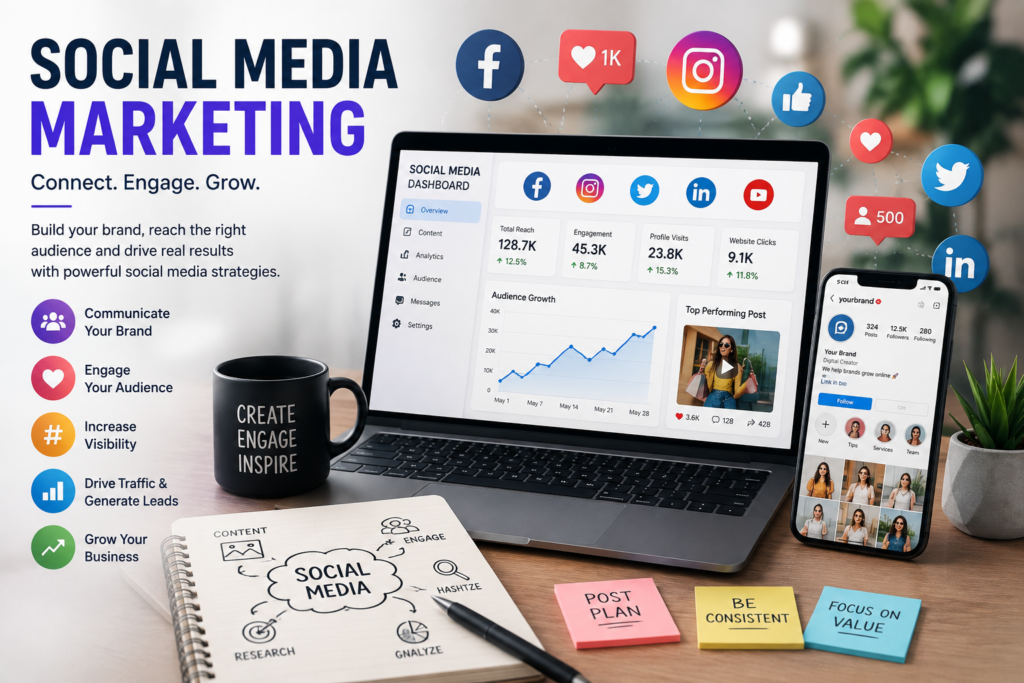
Social media has transformed the way businesses communicate with their customers. Platforms such as Instagram, Facebook, LinkedIn, and YouTube provide businesses with opportunities to build awareness, engage with audiences, and promote their products and services.
However, successful social media marketing requires more than simply publishing random posts. Businesses need a clear strategy, consistent branding, valuable content, and a strong understanding of their target audience.
What Is Social Media Marketing?
Social media marketing is the use of social media platforms to promote a business, product, service, or brand.
A social media marketing strategy can help businesses:
- Increase brand awareness
- Build an online community
- Generate website traffic
- Engage with customers
- Generate leads
- Support sales
Choosing the Right Social Media Platform
Not every business needs to be active on every social media platform.
The best platform depends on your audience and business goals.
Instagram is particularly useful for visually driven industries such as fashion, beauty, food, travel, lifestyle, interiors, and retail.
Businesses can use Reels, Stories, images, carousels, and other content formats to engage audiences.
Facebook can be useful for businesses that want to build communities, reach local audiences, and run targeted advertising campaigns.
LinkedIn is particularly valuable for B2B businesses, professionals, agencies, consultants, and companies looking to build professional credibility.
YouTube
YouTube is useful for long-form educational content, tutorials, product demonstrations, reviews, and video storytelling.
How to Create a Social Media Strategy
Step 1: Define Your Target Audience
Before creating content, identify who you want to reach.
Consider factors such as:
- Age
- Location
- Interests
- Profession
- Problems
- Buying behavior
Understanding your audience helps you create content that is more relevant.
Step 2: Set Clear Goals
Your social media goals should be specific.
For example:
- Increase brand awareness
- Generate website traffic
- Increase engagement
- Generate leads
- Promote a new product
Clear goals make it easier to measure performance.
Step 3: Create Valuable Content
Your content should provide value instead of constantly promoting your products.
Useful content formats include:
- Educational posts
- Industry tips
- Short videos
- Tutorials
- Customer testimonials
- Behind-the-scenes content
- Product demonstrations
- Frequently asked questions
Step 4: Maintain Consistent Branding
Your social media profiles should have a consistent visual identity.
Use consistent:
- Brand colors
- Fonts
- Logo placement
- Photography style
- Tone of voice
Consistency makes your business easier to recognize.
Step 5: Create a Content Calendar
A content calendar helps you plan and organize your posts.
For example:
Monday: Educational post
Wednesday: Industry tip
Friday: Short-form video
Sunday: Customer story or testimonial
The exact schedule can vary depending on your audience and platform.
Why Engagement Matters
Social media is not only about publishing content. It is also about building relationships.
Responding to comments and messages can help businesses create stronger relationships with their audience.
Businesses should monitor:
- Comments
- Direct messages
- Mentions
- Reviews
- Customer questions
Measuring Social Media Performance
To understand whether your strategy is working, track relevant metrics such as:
- Reach
- Impressions
- Engagement
- Website clicks
- Follower growth
- Leads
- Conversions
The most important metrics depend on your business goals.
Common Social Media Marketing Mistakes
Some common mistakes include:
- Posting without a strategy
- Ignoring audience feedback
- Using inconsistent branding
- Focusing only on promotional content
- Not tracking performance
- Trying to use every platform at once
A focused and consistent strategy is often more effective than being active everywhere without a clear purpose.
Conclusion
Social media marketing can be a powerful tool for businesses that want to build visibility, communicate with customers, and grow their online presence.
The key is to understand your audience, choose the right platforms, create valuable content, maintain consistent branding, and regularly measure your results.
With a well-planned strategy and consistent execution, social media can become an important part of your overall digital marketing strategy.